

 Image 1 of 2
 Image 2 of 2
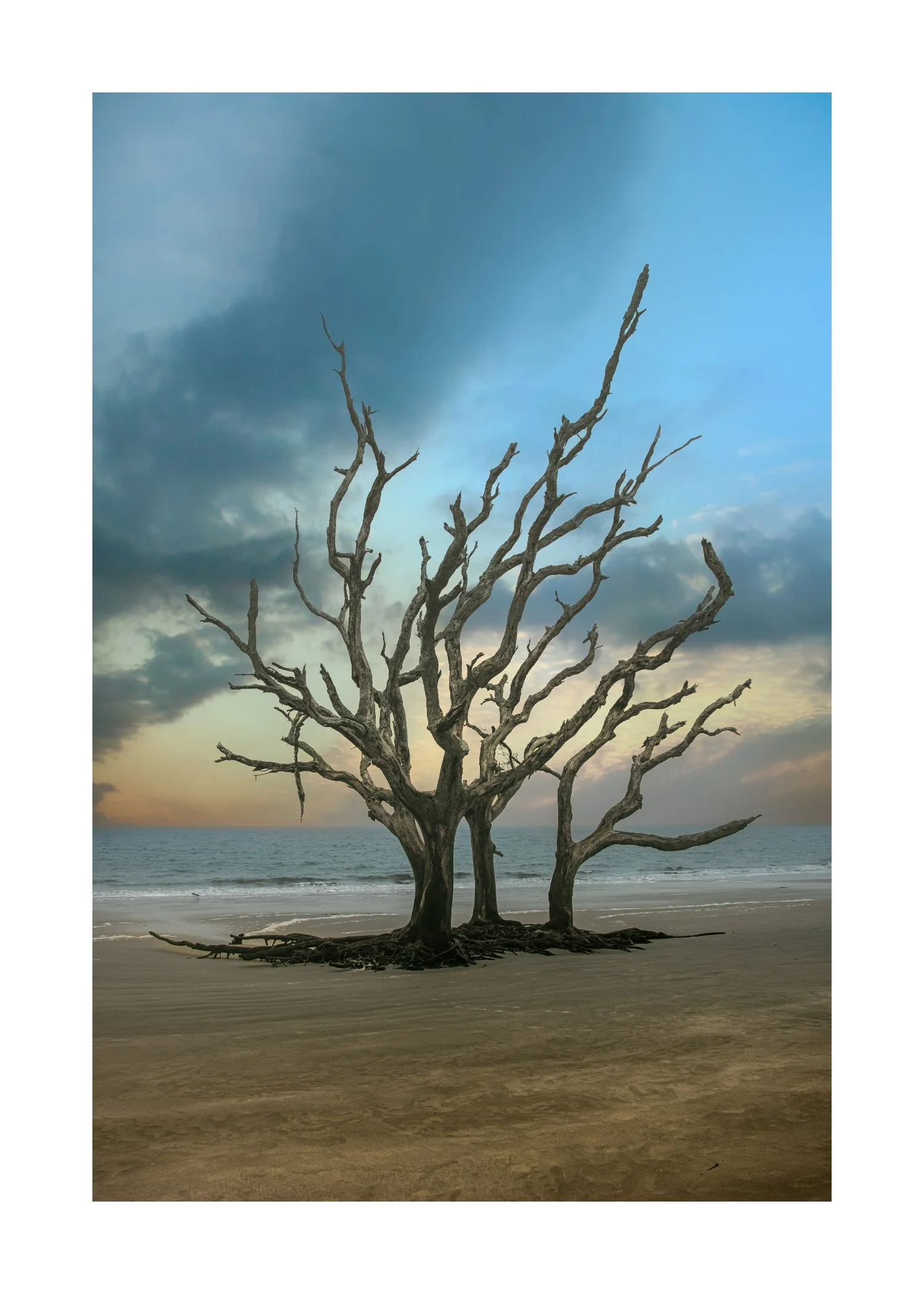
Driftwood Beach on Jekyll Island, Georgia, is a surreal shore of bleached, weathered trees and exposed roots on pale sand. Toppled live oaks, pines, and palmettos—worn by salt, sun, and storms—form a low, horizontal skyline of trunks, twisted limbs, and root crowns among tidal pools. Colors are muted: ivory sand, gray-silver wood, coastal greens, and soft blues. At low tide the wood patterns and reflects in wet sand; at high tide waves curl around stumps, making tiny islands. Light shifts from warm golden hours to stark overcast days. Surf, wind, gulls, and salt air fill the scene while tidal channels trap marine life and create reflective pools. Popular with photographers, painters, walkers, and birdwatchers, the fragile beach constantly changes as erosion and storms reshape it, offering a poetic mix of decay and form.
Driftwood Beach on Jekyll Island, Georgia, is a surreal shore of bleached, weathered trees and exposed roots on pale sand. Toppled live oaks, pines, and palmettos—worn by salt, sun, and storms—form a low, horizontal skyline of trunks, twisted limbs, and root crowns among tidal pools. Colors are muted: ivory sand, gray-silver wood, coastal greens, and soft blues. At low tide the wood patterns and reflects in wet sand; at high tide waves curl around stumps, making tiny islands. Light shifts from warm golden hours to stark overcast days. Surf, wind, gulls, and salt air fill the scene while tidal channels trap marine life and create reflective pools. Popular with photographers, painters, walkers, and birdwatchers, the fragile beach constantly changes as erosion and storms reshape it, offering a poetic mix of decay and form.